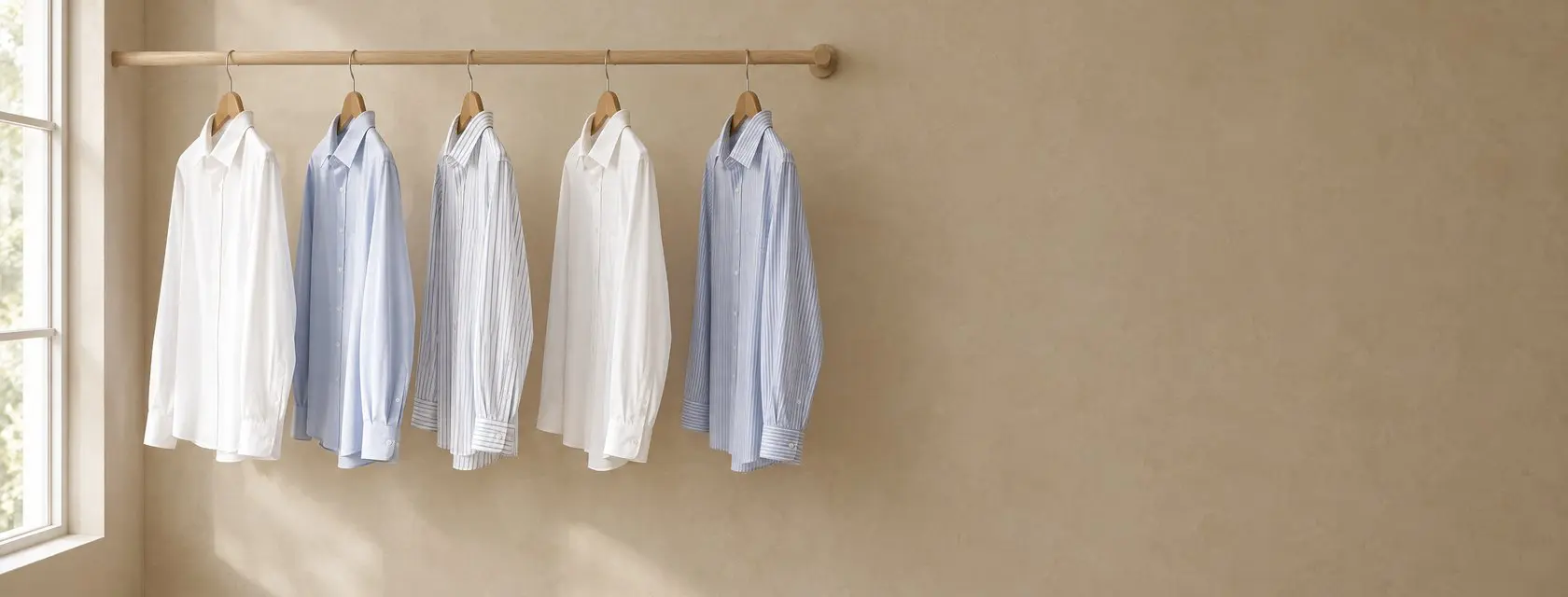
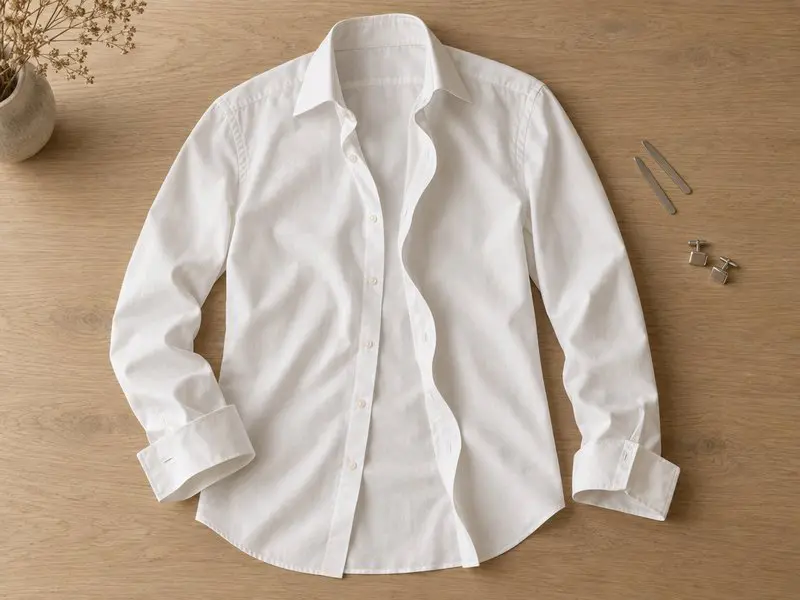
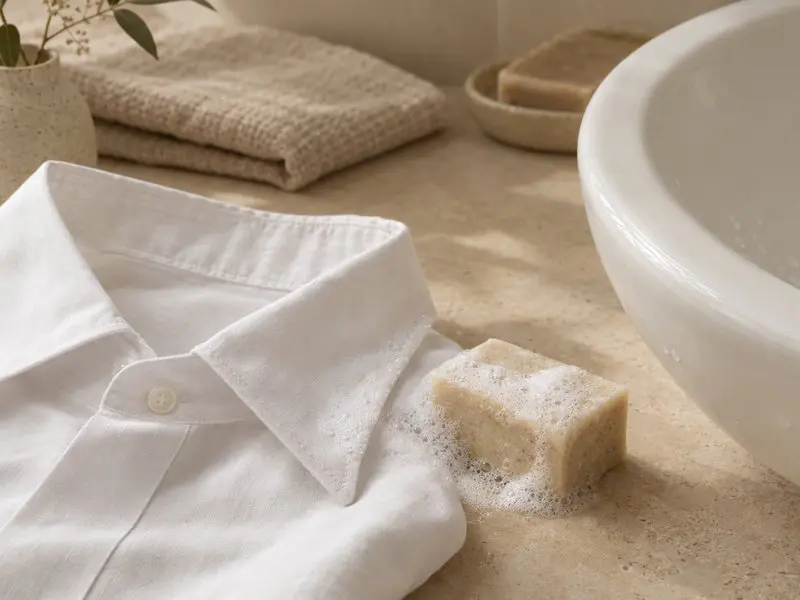
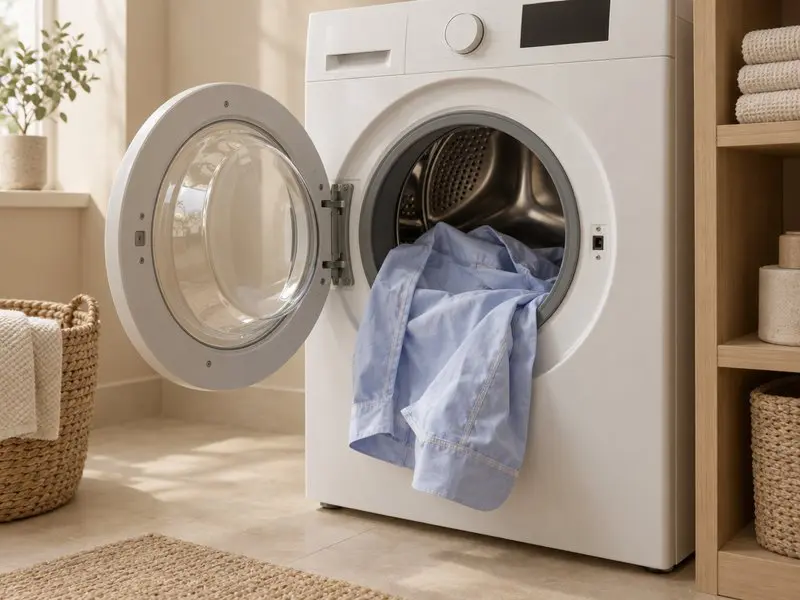
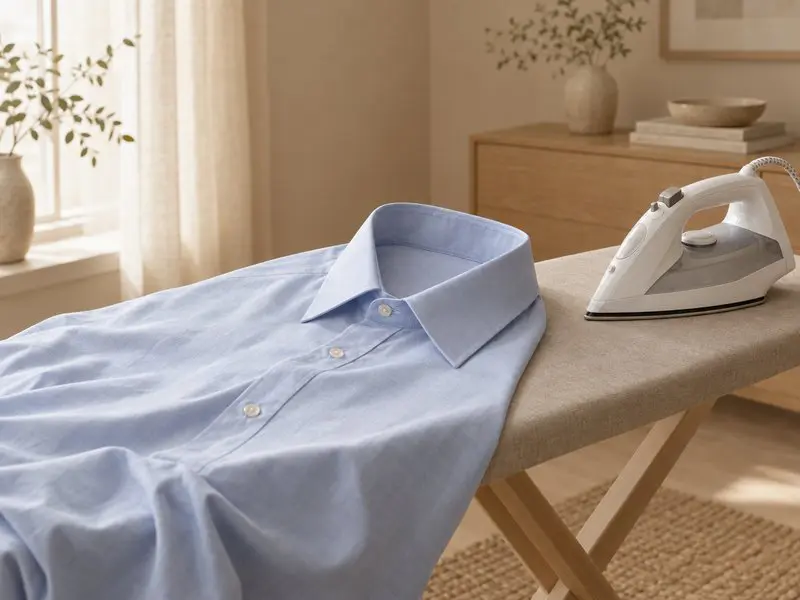
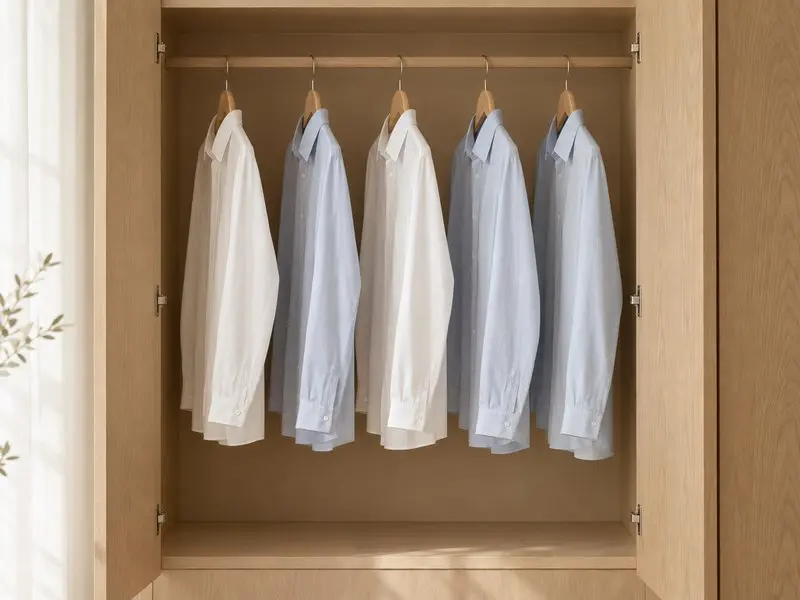
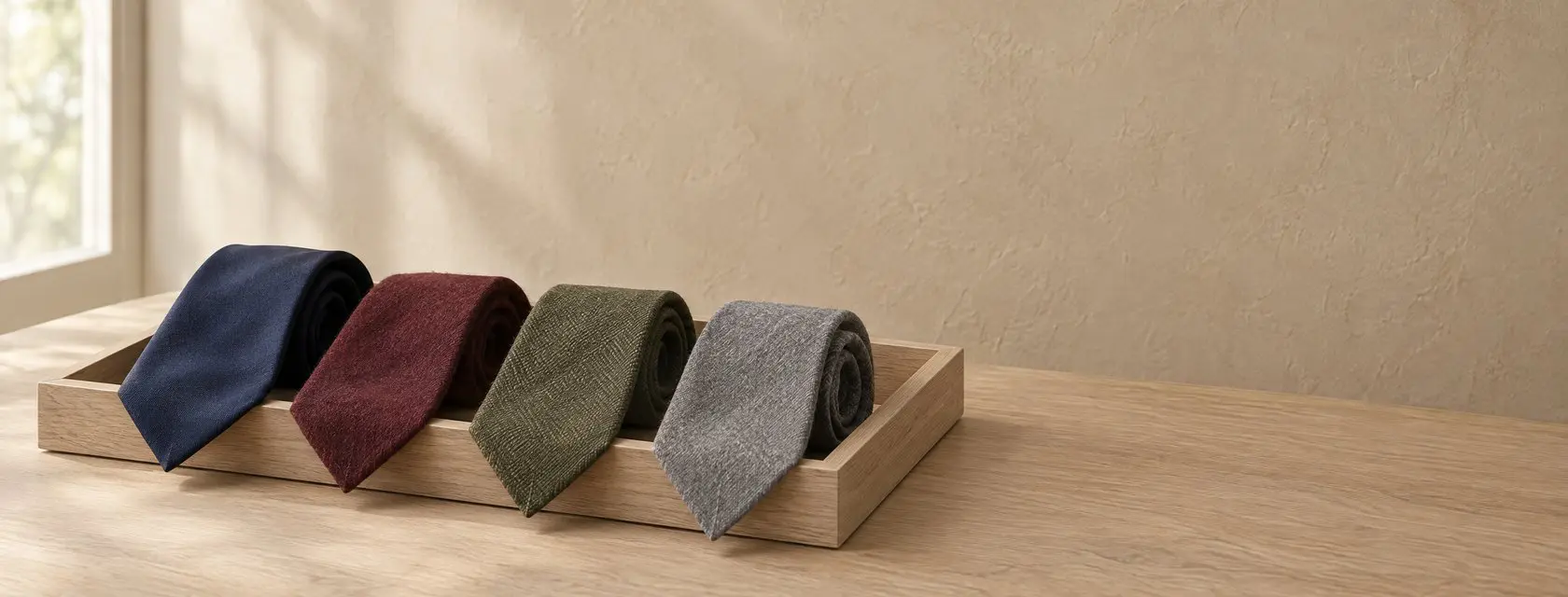
Strong, breathable and easy to care for. Most cotton is fine at 30–40 °C. Hot washes and tumble drying can make it shrink, especially the first few times. Wash whites on their own so they stay bright.
Iron while still slightly damp for the best result.
30–40 °C
Whites separately
Iron damp
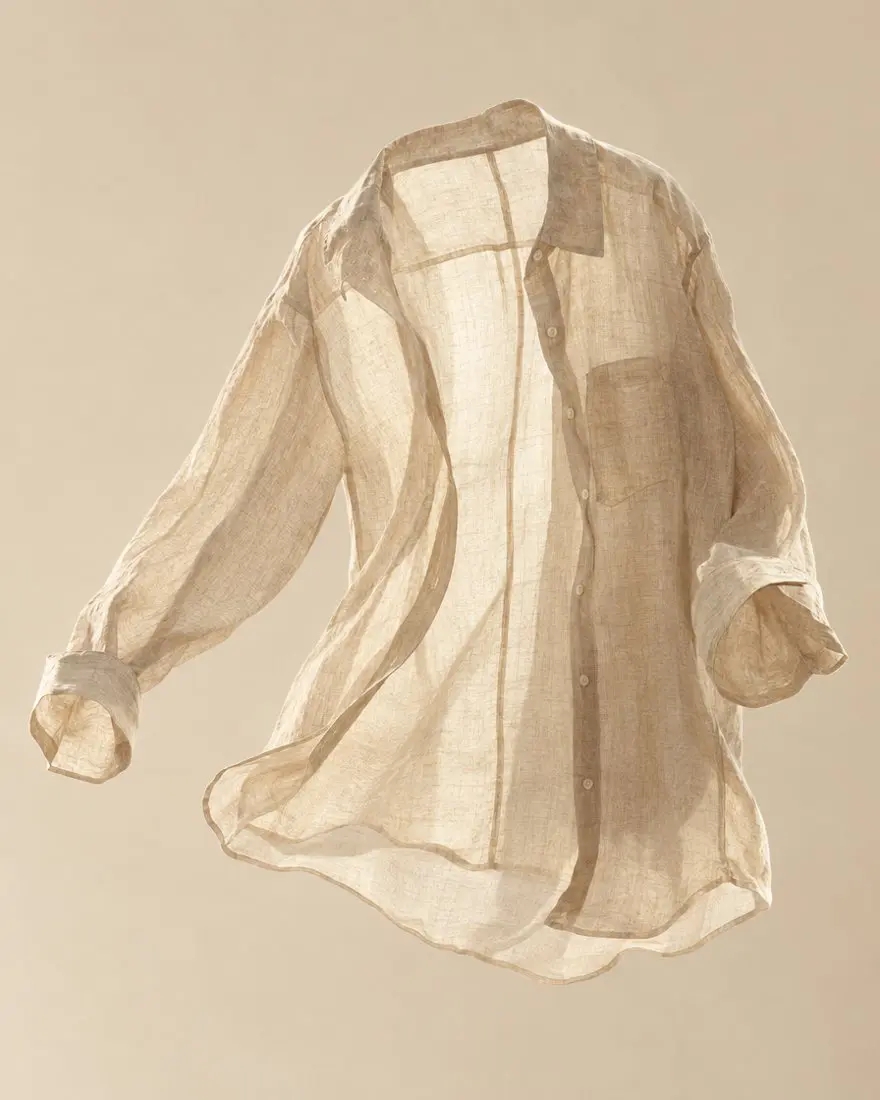
Linen is a natural fibre, and when wet it easily loses its shape. Pull it gently into shape while it is still damp, and use a steam iron on the hottest linen setting.
Iron on the reverse side. That way you avoid shiny marks on dark colours, and the natural sheen is kept. A few soft creases are part of linen's character.
Reshape damp
Hot steam iron
Reverse side
These fibres are made from cellulose, usually from wood pulp. They are soft and drape beautifully, but wet fibres are weaker, so the garment can lose its shape or shrink.
Wash on a gentle cycle, never wring, and hang to dry. If the garment has lost its shape, a steam iron quickly sets it right.
Gentle cycle
Don't wring
Steam iron
Wool cleans itself surprisingly well, so it often just needs airing. When it needs a wash, use a wool detergent without enzymes and your machine's wool programme, or wash it by hand in lukewarm water.
Press out the water in a towel and dry flat. Steam it afterwards or press through a cloth, and the natural sheen comes back.
Air first
Wool cycle
Dry flat
Fine, soft yarns need the gentlest treatment. Hand wash or use the wool cycle with wool detergent, squeeze out the water without twisting and dry flat on a towel, reshaping while damp.
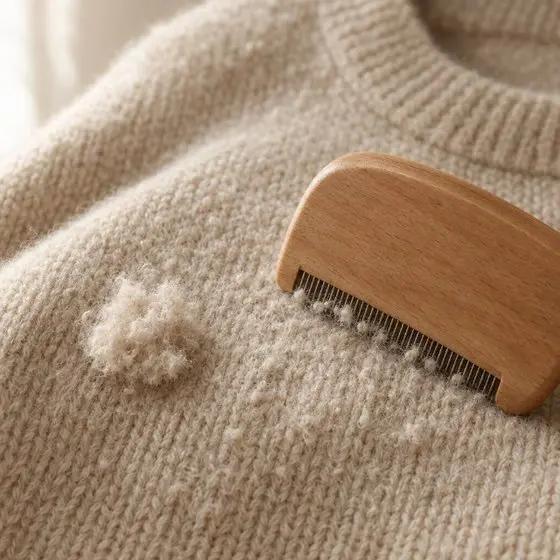
Pilling is normal at first. Remove it with a cashmere comb or fabric shaver.
Hand wash
Dry flat
Store folded
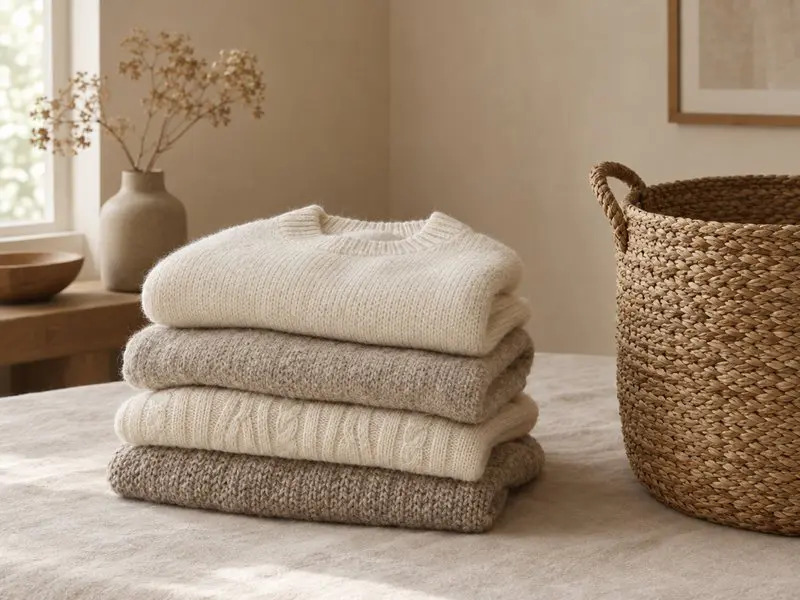
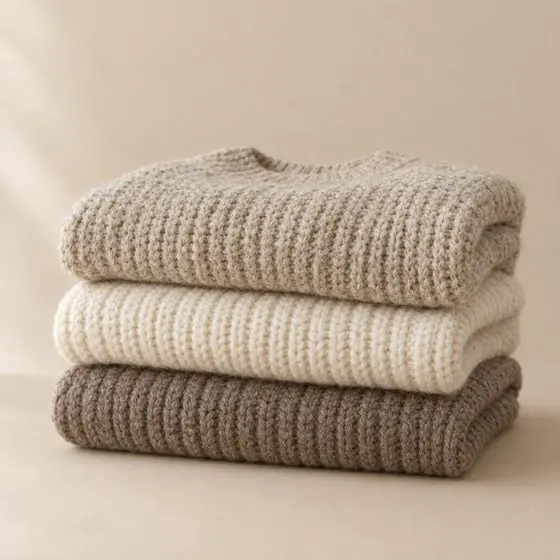
Heavy knits stretch under their own weight when wet or on a hanger. Reshape them by hand after washing and dry them flat, as the "dry flat" symbol on the care label shows.
Keep them folded in the wardrobe, never hanging.
Reshape
Dry flat
Fold, don't hang
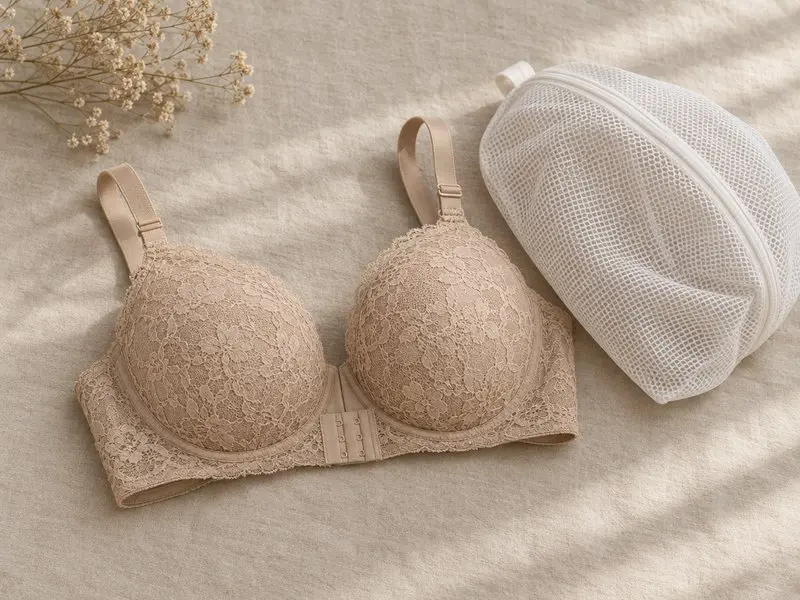
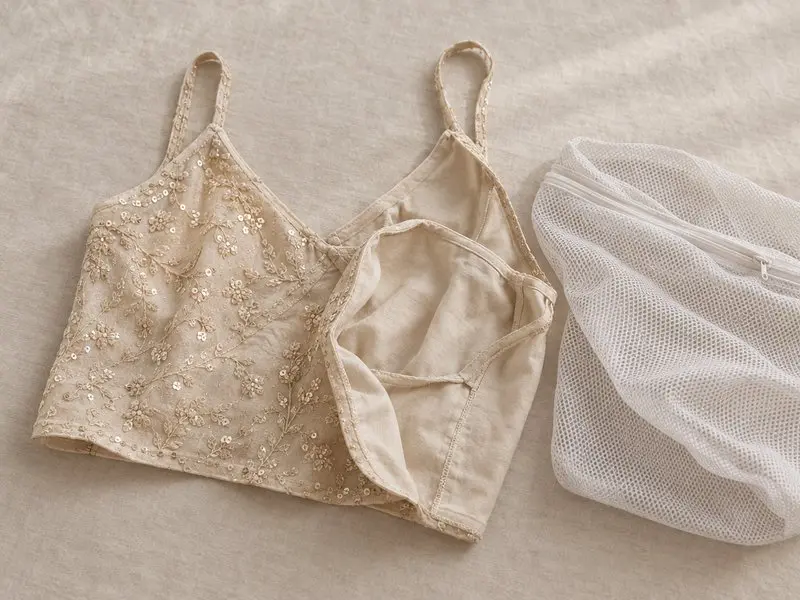
Silk is one of the most delicate natural fibres. Wash it by hand or on a delicate programme in a laundry bag, in cool water with a silk or mild detergent.
Wet silk must not be wrung or stretched. Roll it in a towel to remove the water, dry it out of direct sunlight and iron on the reverse at low heat.
Delicates detergent
Don't stretch wet
Low iron
Polyester & other synthetics
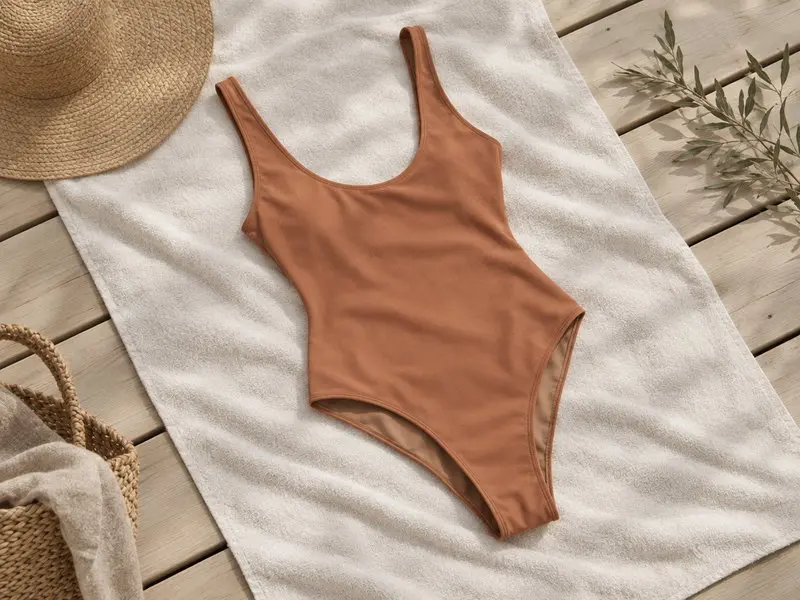
Polyester and polyamide dry quickly and rarely need ironing. Wash at 30–40 °C. High heat can leave permanent creases or a shine.
Sportswear holds on to odour, so wash it soon after use and skip the fabric softener. Full loads at low temperatures shed fewer fibres, and a laundry bag can help catch them.
30–40 °C
No softener
Low heat
Elastane gives jeans, leggings and underwear their stretch, but it does not like heat. Avoid hot washes, high tumble-dryer heat, chlorine bleach and fabric softener, which all wear out the elasticity faster.
Low heat
No chlorine
No softener
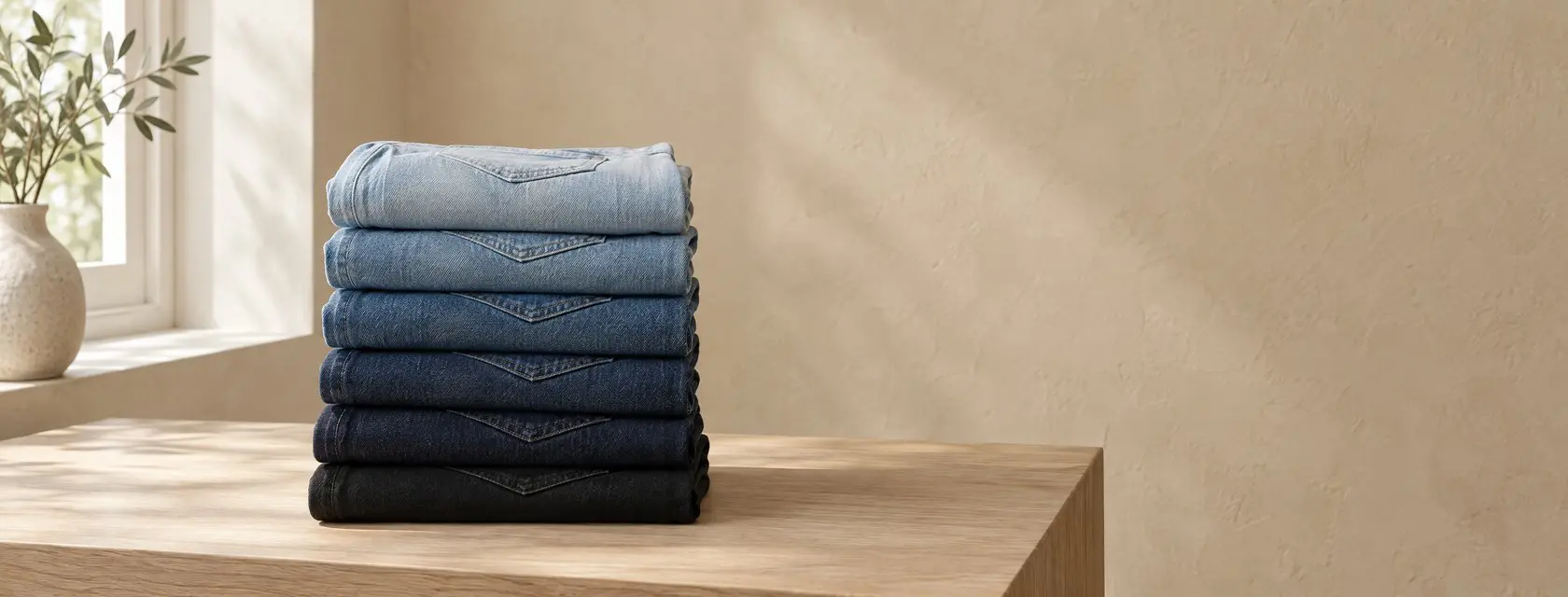
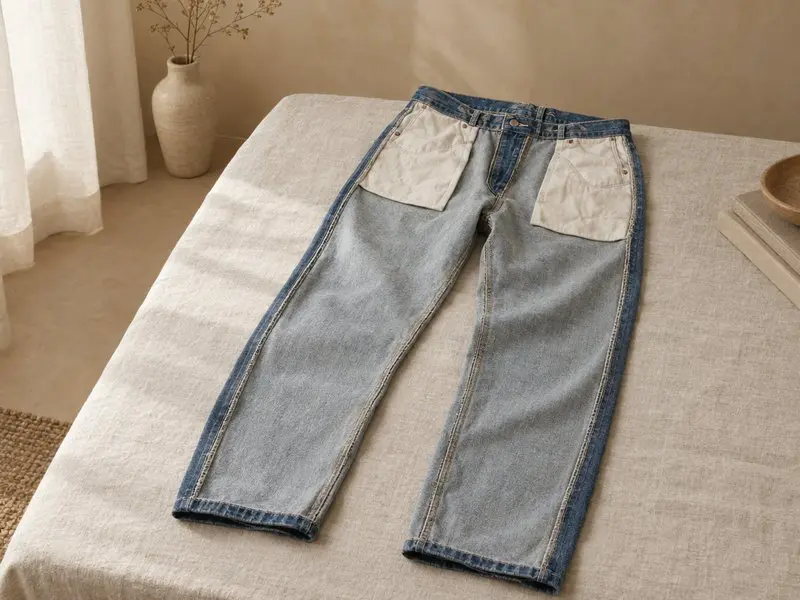
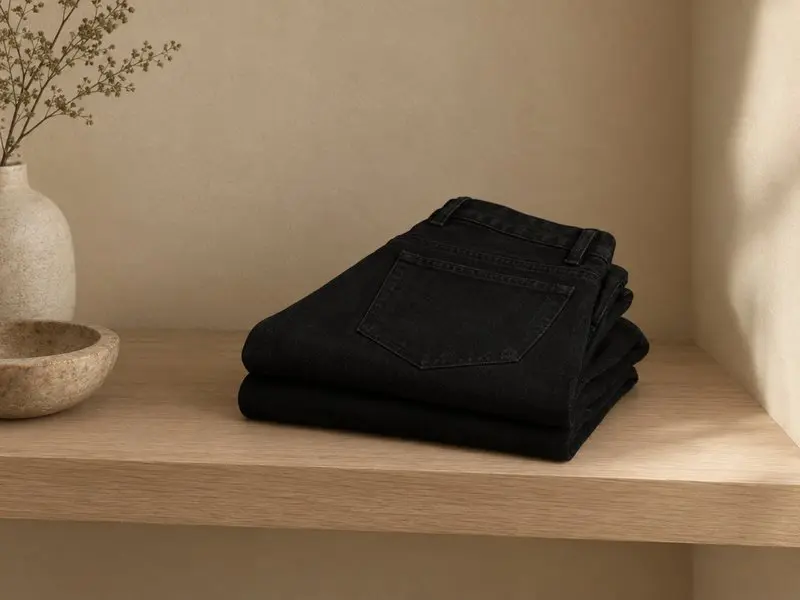
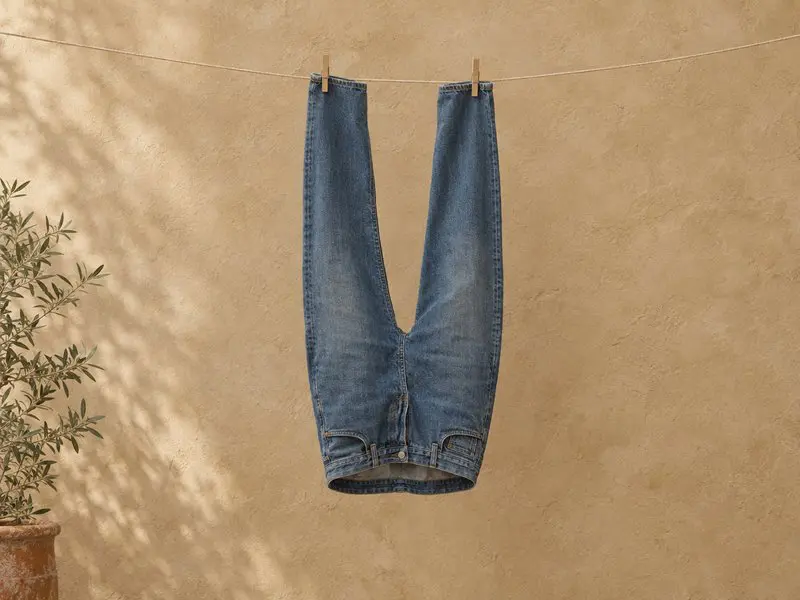
Wash jeans rarely, inside out and at a low temperature, so the colour lasts longer. Hang them up straight after the wash so they don't crease.
Indigo-dyed denim can give off some loose dye, especially when the jeans are new, and it can transfer to light fabrics and furniture. Wash new jeans separately the first few times.
Inside out
Wash separately
Unload promptly
See the jeans guide below