
06
Kidswear
Children's clothes work harder than any other part of the wardrobe. From the first bodysuit to the muddy rain jacket: how to wash, protect and pass them on.
The first months
Baby care
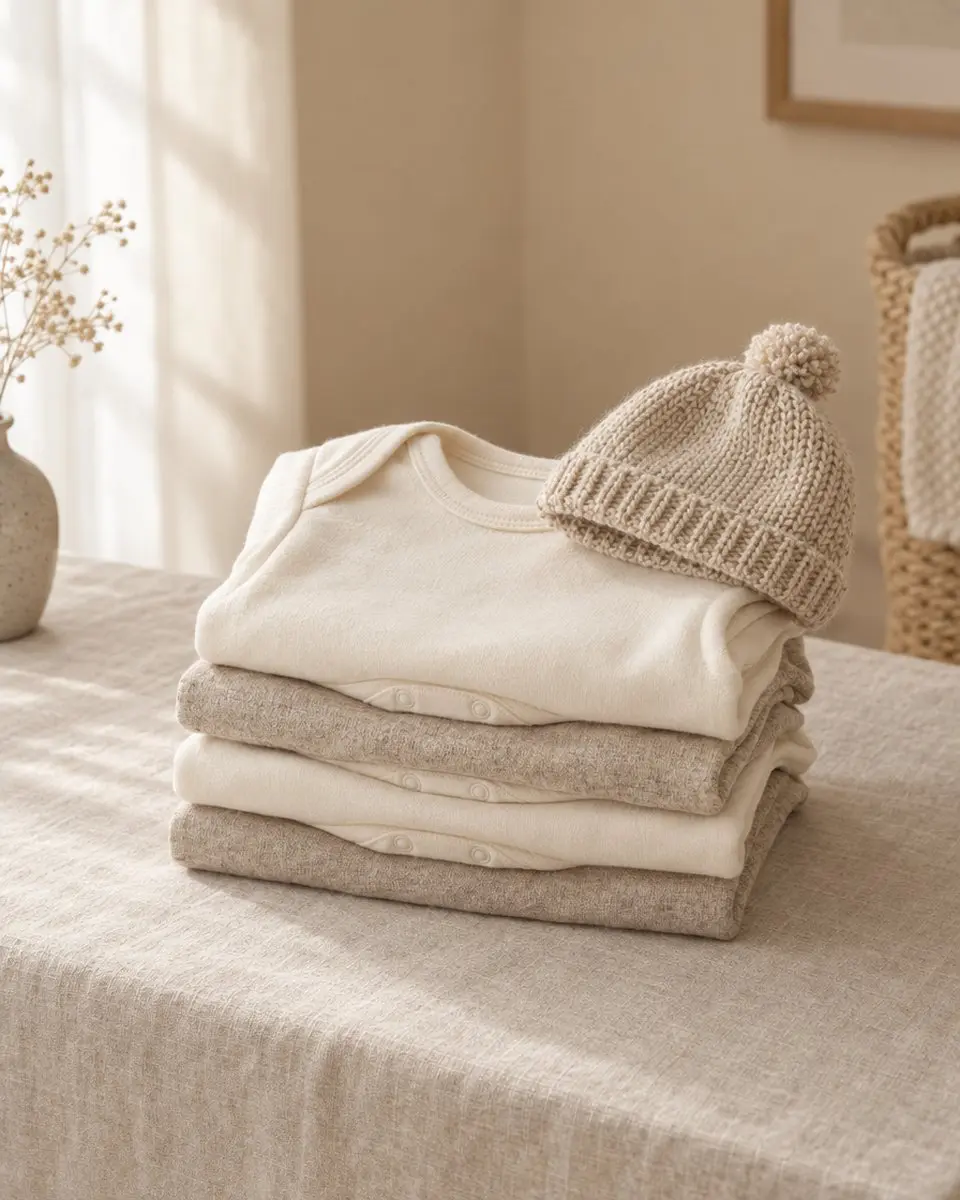
A baby's skin is thin and sensitive, so the way you wash matters more in the first months. A few simple habits are all it takes.
Wash before the first wear
New clothes can carry residues from production, transport and storage, such as excess dye or finishing agents. A wash removes them and makes the fabric softer. Do it before the baby arrives, especially for pieces worn close to the skin: bodysuits, tights and hats. For extra peace of mind, wash them twice before the first wear – a second wash rinses out even more of what's left from production.
40 °C is enough
Everyday baby clothes come clean at 40 °C, which is gentle on fabric and colours and saves energy. Save 60 °C for illness, big nappy accidents and stubborn stains. Always check the label, especially for wool and blends.
Choose a mild detergent
Liquid and powder both work. Choose one with as little fragrance and dye as possible, dose by the pack and leave out fabric softener. A special baby detergent is only needed if your baby's skin is sensitive. An extra rinse helps too.
Their own wash? Usually not.
Most babies are fine with their clothes washed together with the rest of the family's, as long as the detergent is mild. The easiest choice in the first months is a fragrance-free detergent for the whole load. Then everything can go in together.
Good to know
When a separate wash makes sense
- Sensitive skin or eczema. Wash your baby's clothes, bedding and towels on their own with a fragrance- and dye-free detergent, and add an extra rinse.
- Cloth nappies. Always wash them on their own, at 60 °C and without fabric softener, which reduces how much they absorb.
Look for OEKO-TEX® class I
OEKO-TEX® STANDARD 100 has its strictest limits in product class I: articles for babies and toddlers up to three years. If a product is certified, you'll find the label on it.
OEKO-TEX® STANDARD 100Milk, purée and time
Yellow stains on baby clothes
Most yellow stains come from milk, spit-up or orange food like carrot. Milk contains protein that sets with heat, and carrot gets its colour from beta-carotene, a pigment that dissolves in fat. Some marks only appear after storage, when invisible residues slowly darken in contact with air.
-
01
Rinse at once, in cold water.
Every minute counts. Rinse from the back of the fabric. Never use warm water on milk or spit-up, as heat sets the protein.
-
02
Work in a little gall soap.
Rub it into the damp stain and leave it for 10–15 minutes. Gall soap also works on wool and silk – press it in rather than rubbing. Test on a hidden spot first on coloured clothes.
-
03
Wash as the label says.
A quick rinse and treatment usually stops the stain from setting at all.
Never
Warm water on milk stains, or tumble drying before the stain is gone. Heat can make it permanent.
-
01
Scrape off and rinse.
Remove what you can, then rinse in cold water.
-
02
Work in a drop of dish soap.
The orange colour comes from carotenoids, pigments that bind to fat rather than water. Dish soap is made to lift fat, so work a drop into the stain and leave it for 15 minutes.
-
03
Soak if it's still there.
Soak in lukewarm water with an enzyme (bio) detergent for 30 minutes or longer, then wash as the label says.
-
04
Let daylight finish the job.
Dry outside if you can. Daylight fades what's left of the orange.
Same trick, other foods
Sweet potato, pumpkin and squash get their colour from the same type of pigment, so they come out the same way.
-
01
Soak first.
At least 30 minutes in soapy water, or a few hours in lukewarm water with an enzyme (bio) detergent. On whites and colourfast fabrics, oxygen bleach works well.
-
02
Wash warm.
Use the warmest temperature the label allows.
-
03
Dry in daylight.
On white cotton, daylight can bleach the last traces of yellow.
-
04
Check before you dry.
Still there? Soak again before it goes near the tumble dryer.
Go easy on bleach
Choose oxygen bleach over chlorine bleach – it's gentler on fibres and colours, and chlorine is too harsh for most baby clothes. Skip enzymes and bleach on wool and silk.
Prevent it
Wash baby clothes before you put them away, store them clean and dry, and wash them once more before the next baby wears them.
Everyday accidents
The kids' stain guide
Treat it soon, start with cold water and blot rather than rub. Test any stain remover on an inside seam first.
What to do
Scrape off, rinse in cold water, dab with liquid or enzyme detergent, wash at 40 °C. Protein stains go in cold first – heat can set them.
What to do
Scrape off, rinse in cold water and work in a drop of dish soap. Leave 15 minutes, soak with enzyme detergent if needed, then wash. Daylight fades what's left. More in Yellow stains
What to do
Soak for a few hours in lukewarm water with an enzyme detergent – or oxygen bleach on whites – then wash warm and dry in daylight. Choose oxygen bleach over chlorine.
What to do
Let mud dry and brush it off. Rub a little enzyme detergent into grass marks, wait ten minutes, wash at 40 °C.
What to do
Washable felt-tip: rinse from the back until the colour stops running, then wash as warm as the label allows. Permanent marker: dab with rubbing alcohol. Crayon: scrape, iron on low between paper towels, then wash warm.
What to do
Rinse straight away under running water before it dries, then wash. Dried paint usually won't come out – act fast.
What to do
Cold rinse from the back, then liquid or enzyme detergent and wash. For whites, an oxygen bleach soak. Drying in daylight can fade any last traces.
What to do
Rinse in cold water, soak with a little oxygen bleach, wash at 60 °C. Dry outdoors in the sun if you can – it helps fade marks.
What to do
Work dish soap into the mark, leave 15 minutes, wash warm. Orange marks come from UV filters reacting with iron in the water – never use chlorine bleach; an oxygen-based stain remover is safer.
Jackets, fleece and snowsuits
Outerwear that keeps working
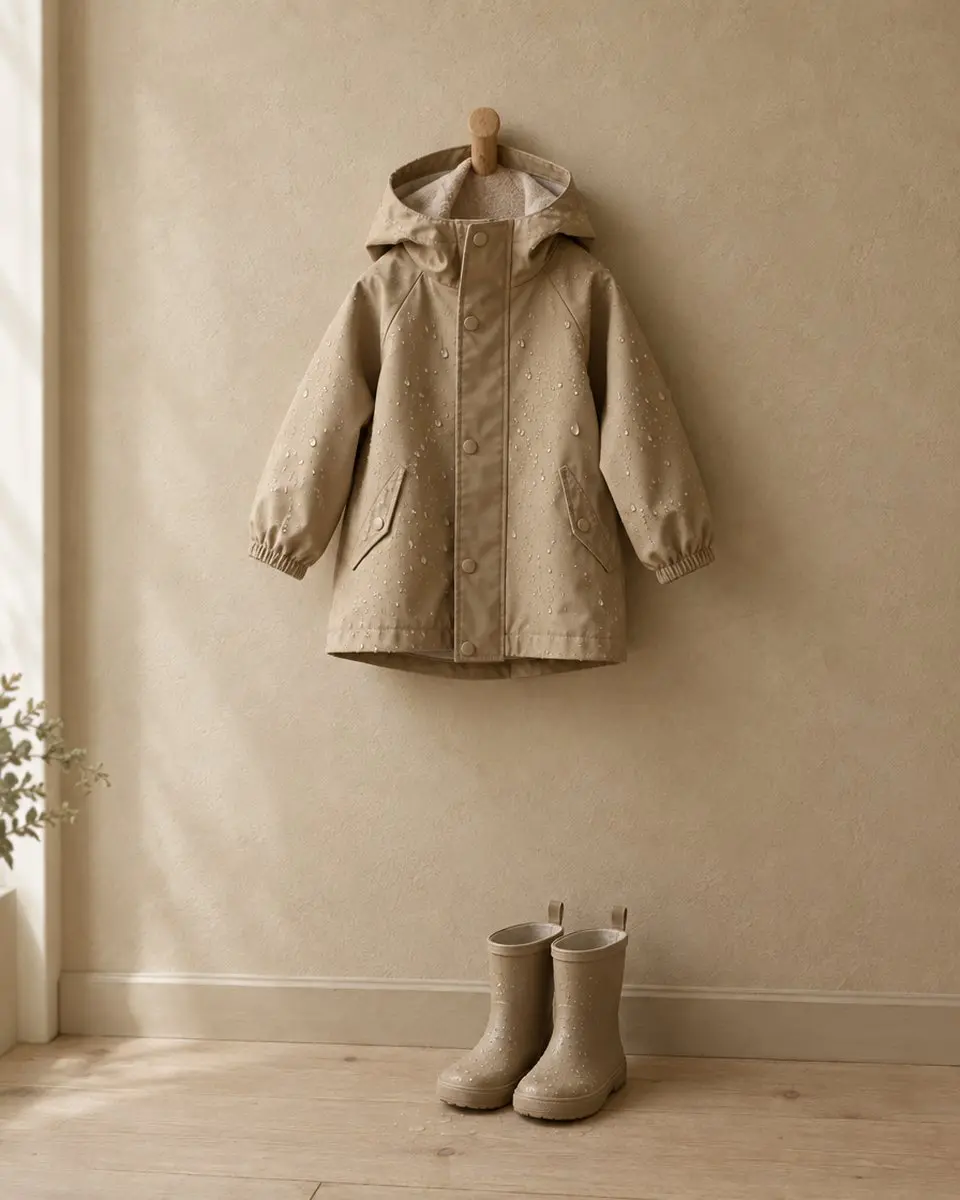
Rain jackets, shell trousers and snowsuits protect best when they're washed less, and washed right. Often you can simply wipe off light dirt or air out smells.
-
01
Wash less.
Wipe off dirt with a wet cloth, then hang the garment outside to air. Every wash wears a little on the wind- and waterproof function.
-
02
Check the label.
Wash with similar colours, at the temperature on the care label.
-
03
Close everything.
Zips, poppers, buttons and velcro – open velcro catches on other clothes.
-
04
Turn it inside out.
That way the outer fabric doesn't rub against the rest of the load.
-
05
Mild detergent, no softener.
Fabric softener coats the fibres, so the garment's functions work less well.
Spot-clean first
Most mud brushes off once it's dry. A damp cloth handles the rest, and the full wash can wait.
After washing
Dry with gentle heat to bring the water-repellency back. See Keep it water-repellent
-
01
Wash rarely.
Dab small marks away with a wet cloth. Fresh air takes care of most smells.
-
02
Similar colours, low temperature.
Follow the label and keep it cool.
-
03
No fabric softener.
It makes fleece less soft and less warm over time.
-
04
Wash in a laundry bag.
It means less pilling and wear, and can help reduce the fibres released in the wash.
Between washes
A few hours outdoors often does the job. With a textile refresher spray you can also wait longer before the next wash.
-
01
Check the label.
Use the temperature on the care label for both down and padded jackets.
-
02
Down detergent, no softener.
For down, a down detergent protects the natural oils in the feathers. Leave out softener, because it can reduce the insulation.
-
03
Tumble dry on low.
Add two or three clean tennis balls. They break up clumps and give thick jackets their volume back.
-
04
Dry it completely.
This can take more than one cycle. Shake the jacket between rounds.
Damp down won't keep warm
Down that isn't fully dry clumps together and can start to smell.
-
01
Air dry, or use gentle heat.
Hang it up, or use gentle heat: a heated drying cupboard, or the tumble dryer on low if the label allows.
-
02
Heat brings back repellency.
Gentle warmth after washing switches the water-repellent finish back on.
-
03
No dryer? Use the iron.
If the label allows ironing, iron on low through a cloth, or steam carefully.
-
04
Open up to dry faster.
Open all zips, including the seat zip on overalls, and turn mittens inside out.
Hang, don't fold
Store rainwear and snowsuits on a hanger. Folding for long periods can damage the waterproof coating.
When to re-proof
Keep it water-repellent
Water-repellency fades a little with every wear and wash, even when you dry the garment correctly. Often after around ten washes, depending on use, the garment needs a new treatment.
-
01
Test with water
Drip a few drops of water onto the fabric, ideally on the knees, elbows and seat, where wear shows first. Drops that roll away mean the finish still works. A dark, wet patch means it needs help.
-
02
Reactivate with heat
After every wash, give it gentle heat: a heated drying cupboard, or a low tumble if the label allows. Heat wakes the finish up again.
-
03
Start with a clean garment
Dirt and grease stop a new treatment from bonding and weaken the function. Wash first.
-
04
Re-proof, PFAS-free
Choose an impregnation spray without PFAS (also called PFCs) and follow the instructions on the bottle. Many sprays also protect against stains.
About the finish
BIONIC-FINISH®
Some water-repellent outerwear is treated with BIONIC-FINISH®, a water-repellent finish developed by the German chemical company Rudolf Group. Inspired by how nature keeps leaves and feathers dry, it uses tree-like branched molecules that sit on the fibres and make water bead and roll off.
The finish is made without fluorinated chemistry (PFAS), and the chemistry is bluesign® APPROVED and listed in the ZDHC Gateway. The effect decreases gradually, as with all water-repellent finishes, and heat after washing helps reactivate it.
What ZDHC means
ZDHC (Zero Discharge of Hazardous Chemicals) works to remove hazardous chemicals from textile production. Its restricted substances list (MRSL) sets which chemicals must not be used in factories, and the ZDHC Gateway lists chemical products – such as dyes and water-repellent finishes – that meet those requirements. When a finish is listed there, the factory knows it can be used safely in production.
Look for OEKO-TEX® on the label
OEKO-TEX® STANDARD 100 tests the finished garment – fabric, thread, zips, prints and finishes like a water-repellent treatment – for harmful substances, with the strictest limits for baby and children's products. If a jacket carries the label, every part of it has been tested by an independent institute.
Small details, big difference
Safety, wool & passing it on
Safety details
Check poppers and buttons regularly and re-sew anything loose. Cords in hoods or necklines can get caught – remove them on clothes for small children. Keep reflective details clean so they stay visible in the dark. Reflective prints and stickers are decorative, so use a proper safety reflector as well.
Wool for little ones
Merino base layers and wool outerwear need washing rarely – air them after use. Wash them on the wool cycle at 30 °C with wool detergent, then let them dry flat. Don't tumble dry unless the label says it's allowed.
Pass it on
Children outgrow clothes long before they wear them out. Wash, fold and hand them to a sibling, a friend or a second-hand shop. A mended knee patch is a badge of a good childhood.
Pass it on. Clothes your child has outgrown still have plenty of wear left. Give them to another child who can enjoy them.
Quick answers
What parents ask most.
Close all zips and velcro, turn the garment inside out and follow the care label. Use a gentle detergent without softener. More under Outerwear
Yes, at the temperature on the label and without fabric softener, which can reduce the insulation. Tumble dry on low with tennis balls until completely dry.
Dry with gentle heat after every wash to reactivate it. When drops no longer roll off but darken the fabric, clean the garment and re-proof it with a PFAS-free spray. See the four steps
Only if your baby's skin is sensitive. Otherwise a mild detergent with little fragrance and dye works well, especially with an extra rinse.
One wash before first wear is the most important. A second wash gives extra peace of mind and is a good idea for pieces worn right against the skin, like bodysuits, tights and hats.